
Improving the assessment of pure ecological harm

2023
Elisa Akin, Cenay Aliye |

The present research focuses on the effectiveness of the existing legal framework relating to forest and biodiversity conservation in India and the challenges involved in it.

The dominant model for agricultural development has not adequately considered environmental and social externalities, leading to their insufficient integration into decision-making processes that shape agriculture and food systems. There is a critical need for comprehensive regulation of the agricultural sector to design and implement concrete transition pathways towards more sustainable agriculture and food systems at various scales,

Following several years of preparatory work across the globe, legal scholars, judges, UN officials and climate change experts from 11 countries came together to finalise a new normative framework aiming to strengthen the right of climate-displaced persons, households and communities. This resulted in the approval of the Peninsula Principles on Climate Displacement within States in August 2013.

This highly topical book considers the important question of how best to protect the environment of the Third Pole – the area comprising the Hindu Kush Himalayas and Tibetan Plateau – using the tool of international law. Following detailed analysis of the weaknesses in the current legal protections according to comparative legal theory, Simon Marsden recommends three potential options for implementation by policy and lawmakers.
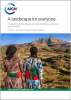
Within a landscape of overlapping ecological, social and economic priorities, there exists a fundamental need to balance the land use dynamics of natural resource management with environmental and livelihood considerations. However, in striving to reach such a balance, people and local institutions are often excluded or forgotten.

The assessment includes a global review of literature and legal information on international and national law and policy, a desk assessment of mangrove-related legal instruments in India, Kenya and Mexico, and an in-depth evaluation of effectiveness of mangrove-related law in Costa Rica, Madagascar and Vietnam.

Annotated with introductions and explanations of key environmental concepts, problems and prospects, this is a collection of pieces on the theme of global environmental politics from a diversity of viewpoints. The contributors highlight important political developments as well as environmental challenges within a rapidly changing international system.
The Arctic is an increasingly important region faced with major challenges caused not only by the effects of climate change, but also by a growing interest in its living and non-living resources, its attraction as a new destination for tourism, and as a route for navigation. It is not only the eight Arctic States that have paid an increased level of attention to the region; several non-Arctic actors from Asia and Europe also seek to gain more influence in the High North.

This study reviews range state policy and management responses to expanding or abundant species of seals -- the Cape fur, northern fur, hooded, harp, ringed, grey, harbour and crabeater seals.