Conservation of biodiversity in Africa : local initiatives and institutional roles. Proceedings of the conference held at the National Museums of Kenya, 30 August-3 September, 1992

1995

Wild caprinae, including sheep and goats, are an extremely valuable group of mammals. While most live in mountains, some inhabit desert grasslands, tropical forests or even arctic tundra. They range in size from the 30kg goral to the 350kg musk ox and display a variety of horn shapes and sizes as well as coat and body coloration. They are highly prized by hunters on account of their horns and their coats.
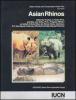
There are currently three species of Asian rhino: the Indian or greater one-horned Asian rhino, the Javan or lesser one-horned Asian rhino and the Sumatran or Asian two-horned rhino. Today, all three are threatened with extinction and two, the Sumatran rhino and Javan rhino, critically so. Although the Indian rhino is to be found in greater numbers than the other two, the threats to this species nevertheless remain significant.

Adopted at the Rio Earth Summit in 1992, the Convention on biological diversity has now been ratified by over 160 countries and forms the backbone of many of the biodiversity activities that have taken place over the last five years. However, despite the unprecedented success of this major international convention, many questions still remain unanswered and many uncertainties prevail.

Discussions in this report address bear farming in China, Hong Kong's gall bladder registration scheme, biological implications of the legal trade in bear gall bladder in Japan and Taiwan's efforts to monitor its domestic market for bear gall bladder. Recommendations are given to better understand, monitor and control the trade.


This work includes 140 pages of tabular data with supporting text and graphics, covering country species diversity, threatened species, national Red Data Book, major food crops, domestic livestock, marine resources, tropical forests, protected areas and systematics collections.

A focus on the use of tiger bone as a medicinal, this review compiles what is known of the current status of tiger populations, the uses and value of tiger bone and the global extent of the trade. It gives recommendations for tiger conservation based on the report's findings.