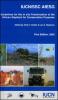
The link between protected areas and tourism is as old as the history of protected areas. Though the relationship is complex and sometimes adversarial, tourism is always a critical component to consider in the establishment and management of protected areas. These guidelines aim to build an understanding of protected area tourism, and its management. They provide both a theoretical structure and practical guidelines for managers.
This publication proposes a framework for assessing management effectiveness, recognising the need for a variety of responses depending on needs and resources. It aims to help all those who wish to assess protected areas, both in suggesting what needs to be done and in providing some guidelines. It includes six practical case studies from Australia, the Congo Basin, Central America, South America and the USA
This guide illustrates the potential for using valuation as a tool for diversifying the funding structure for protected areas and for providing information about stakeholders which is crucial for effective management.
This guide has been prepared by the IUCN Environmental Law Programme and the Foundation for International Environmental Law and Development (FIELD), in cooperation with the World Resources Institute (WRI).
This comprehensive publication presents a history of the evolution of CITES. It begins with the basics and guides the reader through its complex structure. The provisions of the Convention are clearly highlighted in the book, and the numerous resolutions and decisions are explained.
This guide has been prepared by the IUCN Environmental Law Programme and the Foundation for International Environmental Law and Development (FIELD), in cooperation with the World Resources Institute (WRI).