Water and population dynamics : case studies and policy implications : report of a workshop, October 1996, Montreal, Canada

1998
For centuries, genetic resources not protected by Intellectual Property Rights were collected and used without any regulation. They were a free good available for everyone. Huge profits were made but never shared with the custodians of biological diversity. "Access to genetic resources" underscores the importance of informed national approaches to enforce access to genetic resources and benefit-sharing provisions of the Convention on biological diversity.
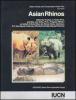
There are currently three species of Asian rhino: the Indian or greater one-horned Asian rhino, the Javan or lesser one-horned Asian rhino and the Sumatran or Asian two-horned rhino. Today, all three are threatened with extinction and two, the Sumatran rhino and Javan rhino, critically so. Although the Indian rhino is to be found in greater numbers than the other two, the threats to this species nevertheless remain significant.
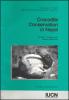
This publication covers the aspects of crocodile conservation in Nepal, such as the range and status of Nepal's gharial and mugger species, causes for their decline, history of crocodile conservation in Nepal, including the captive breeding programme, and IUCN's Crocodile Conservation Project. It also covers crocodile research and training, releases and present stock, and strategy and management options for Nepal. A set of recommendations are also given.
Summarizes the proceedings of participatory workshop, organized by IUCN's Regional EIA Programme in Kathmandu from 15-18 September 1996. The workshop reviewed the existing systems of EIA in South Asian countries and examined the strengths and weaknesses of the current EIA system to formulate the strategies and priority action plans to strengthen EIA systems throughout South Asia