Putting nature on the map : identifying protected areas in the UK

2012
Dudley, Nigel |
Phillips, Adrian |
Stolton, Sue |

L’ouvrage Conservation de biodiversité des zones arides vise à sensibiliser toutes les parties prenantes et à galvaniser une action plus large afin de booster la conservation et le développement des zones arides. Il constitue un appel à l’action ainsi qu’un guide sur comment la conservation et le développement des zones arides peuvent être réalisés de manière équitable.


Globally, disasters due to natural hazards takes an enormous toll in terms of human lives, destruction to crops and livelihoods, and economic losses. Disaster risk reduction (DRR) has therefore become a critical part of sustainable development strategies. Over the past decades, the role of healthy ecosystems in providing cheap, reliable protection against natural hazards has been increasingly recognized.

Globally, disasters due to natural hazards takes an enormous toll in terms of human lives, destruction to crops and livelihoods, and economic losses. Disaster risk reduction (DRR) has therefore become a critical part of sustainable development strategies. Over the past decades, the role of healthy ecosystems in providing cheap, reliable protection against natural hazards has been increasingly recognized.

A large number of approaches have been developed over the last four decades for identifying places of significance for biodiversity, but unfortunately this requires looking at multiple, disconnected databases and other information sources to understand the sites of importance in a particular area.
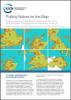
This is a summary of the publication Putting nature on the map, which aims to use Guidelines for Applying Protected Area Management Categories (Dudley, 2008) to identify all the places in the UK that meet the IUCN definition of a protected area, and to assign to them one of the six IUCN protected area management categories and four protected area governance types.
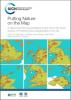
The aim of this publication has been to use Guidelines for Applying Protected Area Management Categories (Dudley, 2008) to identify all the places in the UK that meet the IUCN definition of a protected area, and to assign to them one of the six IUCN protected area management categories and four protected area governance types. This report also identifies ten detailed recommendations for applying the Putting Nature on the Map (PNOTM) approach.

Esta publicación proporciona una orientación para los gestores de áreas protegidas terrestres, marinas y de agua dulce, tanto a nivel de sistemas como de sitios, con respecto a la restauración de los valores naturales de la áreas protegidas y otros valores asociados. Debido a que la restauración a veces es necesaria más allá de los límites de la áreas protegidas (p.