Áreas bajo protección privada : mirando al futuro
Las áreas bajo protección privada merecen un reconocimiento y respaldo mucho mayores que el que reciben en este momento.
Global spending on nature conservation is currently estimated at around US$50 billion per year. Most of this is public money, yet even this is far from sufficient to maintain biodiversity and the ecosystem services upon which our economies, livelihoods and well-being depend. For this reason, many governments are using payments for ecosystem services (PES) and related market-based instruments to encourage the private sector to do more to protect the environment.
Privately protected areas deserve far greater recognition and support than is the case at the moment. Private conservation efforts can often fill important gaps in national policies in terms of both geographic cover and speed of response to conservation challenges, yet they remain a hidden resource: ignored by governments, omitted from international conservation reporting mechanisms and left out of regional conservation strategies.
Water protection, food production, and ecosystem health are worldwide issues, and understanding the links between water, food production and ecosystems is important to the health of all three. This book shows how sustainable ecosystems are essential for water management and food production. It covers food security, the challenges and management of agroecosystems, and how to increase water productivity in agriculture.
Green Infrastructure (GI) is becoming increasingly recognized as an important opportunity for addressing the complex challenges of water management. The GI approach refers to the natural or semi-natural systems that provide services for water resources management with equivalent or similar benefits to conventional (built) "grey" water infrastructure.
This document constitutes a summary of the work, studies and reflection initiated by the Regional Activity Centre for Specially Protected Areas (RAC/SPA) following the recommendations of the Contracting Parties in Almeria in January 2008. It provides answers to the request to assess the knowledge gathered on the effects of climate change on the Mediterranean coastal and marine biodiversity.
Ce rapport présente les résultats de deux études thématiques: d’une part le potentiel écologique pour l'identification des corridors dans la zone APT (Aire Protégée Transfrontalière) du Mayombe et, d’autre part, le potentiel écologique pour la délimitation d’AP (Aires Protégées) au sein même de l’APT (Aire Protégée Transfrontalière) du Mayombe.
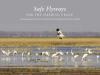
Cranes, a flagship species of waterbirds, have great cultural significance - especially the Siberian Crane. Yet, even after decades of conservation efforts, cranes remain threatened with 11 species at risk. To help reverse these trends, the UNEP/GEF Siberian Crane Wetland Project was the first project to its kind to take a "flyway" approach to conservation, looking to secure the ecological integrity of a network of 16 critical wetlands in Eurasia.
With only about one-sixth of the original coral cover left, most Caribbean coral reefs may disappear in the next 20 years, primarily due to the loss of grazers in the region, according to this latest report, Status and Trends of Caribbean Coral Reefs: 1970-2012. This is the most detailed and comprehensive study of its kind published to date – the result of the work of 90 experts over the course of three years.
<p>This report includes an inventory of data and information on the Iraqi marshland ecosystem; technical guidance on the assessment framework and tools for ecosystem management and biodiversity conservation with regard to the requirements for World Heritage nomination; and guidance on the development of a network in the field of ecosystem management and biodiversity conservation which would contribute to the planning, implementation and monitoring the long-term management of the Iraqi m