
Strategies for conserving migratory waterbirds : proceedings of Workshop 2 of the 2nd International Conference on Wetlands and Development
1999
Biodiversity is increasingly regarded as a resource for rural development and organic agriculture as a production and marketing method that ensures a more productive future for our species and life-support systems. This publication contains the proceedings of a global gathering in May 1999 in Vignola (Italy) to discuss a declaration and action plan for linking together the organic agriculture and nature conservation movements.
The African elephant is the largest living land mammal. It once inhabited most of the continent, from the Mediterranean coast down to its south tip. This picture of elephant range today is one of scattered, fragmented populations south of the Sahara Desert. Estimates suggested that elephant populations had more than halved in several areas between 1981-87.
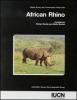
The black and the white rhinoceros have become flagship species for international conservation. They are significant not only for the continuation of a major evolutionary heritage, but also as symbols for the protection of African savannahs. The battle for the survival of these species has been marked by some notable successes and sadly, many failures, and the situation is still critical.
How can we successfully conserve what remains of the world's rapidly diminishing natural and semi-natural areas? Although more and more land and water surface is protected many vital ecosystems are under-represented, and traditional conservation methods are often ineffective. New approaches are urgently needed. This book sets out ways to safeguard all the major ecosystems and explores innovative management partnerships involving individuals, communities, companies and governments.


Although most antelope species still exist in large numbers in sub-Saharan Africa (some in hundreds of thousands), up to three-quarters of the species are in decline. Threats to their survival arise from the rapid growth of human and livestock populations, with consequent degradation and destruction of natural habitats, and excessive offtake by meat hunters.

This manual outlines the significance, prevalence and trends of illegal wildlife trade in the UK and places this in an international context. It is aimed at anyone interested in wildlife crime issues, but particularly those involved in enforcing wildlife crime laws and bringing cases to court. Topics covered include the international illegal wildlife trade and the illegal wildlife trade in the UK, both in native and exotic species.
Conifers are one of the world's most important resources of timber. If managed wisely and used sustainably, these resources will provide wood for a multitude of purposes, virtually indefinitely. Additional products include resins and their derivatives, and even medicinal extracts, for example taxol now used in the treatment of cancer. Conifers occur on all continents except Antarctica.
