Produced by IUCN's Eastern Africa Programme, this publication aims to investigate the extent to which communities have been provided with economic incentives to become involved in sustainable forest management in Eastern and Southern Africa, and how far perverse incentives and disincentives encouraging forest degradation and loss have been overcome. This study concludes that there is an urgent need to provide economic incentives, and it highlights a number of policy recommendations.
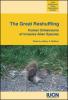
While the issue of invasive alien species (IAS) has important biological components, the human dimensions deserve much greater attention. Humans, with all their diversity of quirks, strengths, and weaknesses, are at the heart of the problem of IAS and, paradoxically, also at the heart of the solution.
The effects of household characteristics on crop diversity are examined using household-level data based on a stratified random sample of 180 households from two districts in Zimbabwe, Uzumba-Maramba-Pfungwe and Tsholotsho.
The future of much of the biosphere will depend on managing large areas using an integrated approach that recognizes human populations have a keen interest in ensuring the continuing productivity of the ecosystems within which they live. Such an approach will have to meet local needs, maintain or restore ecosystem integrity and conserve biodiversity.
Cet ouvrage présente la situation des lois et politiques forestières d'Afrique centrale et identifie des éléments clés pour les améliorer. Il place également la gestion des ressources forestières dans le cadre de tout programme global de développement. Finalement, il traite également du débat sur les systèmes de fiscalité forestière en Afrique centrale et leurs dimensions incitatives.