Food systems and natural resources
2016
The resource use implications and environmental impacts of our food systems are significant.
The resource use implications and environmental impacts of our food systems are significant.

For the three-year IAP project 'food and nutrition security and agriculture', four parallel regional academy network working groups were constituted: in Africa (the Network of African Science Academies, NASAC), Asia (the Association of Academies and Societies of Sciences in Asia, AASSA), the Americas (the Inter-American Network of Academies of Science, IANAS) and Europe (the European Academies’ Science Advisory Council, EASAC).
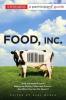
Food, Inc. is a powerful documentary deconstructing the corporate food industry in America. Aided by expert commentators such as Michael Pollan and Eric Schlosser, the film poses questions such as: Where has my food come from, and who has processed it? What are the giant agribusinesses and what stake do they have in maintaining the status quo of food production and consumption?

At America's first frontier, we looked outward across the vast plains -- and they seemed limitless. At the second frontier, we looked downward into oil wells and coal mines. And they, too, seemed limitless. The next frontier will be the age of energy conservation and renewable resources. In Our next frontier, Robert Rodale speaks about the need to adopt a lifestyle now that responds to the changes we'll be faced with tomorrow.
Options Magazine presents IIASA and its latest research for a non-specialist audience.
Interim results are presented from five exploratory sector studies (on livestock, rice, agroforestry, inland fisheries and palm oil), while the development of a ‘valuation framework’ provides a common lens for ensuring that the full range of impacts and dependencies can be examined under different applications (i.e. by sector, system or practice).
This document will share with a broad audience of practitioners and policy makers, notably in the West Asia and Mediterranean regions, what integrated approaches are necessary to make water resources management and climate change resilience actions a success.
Using case studies from Nepal, India and Thailand, this paper explores challenges and governance options that can accept social and physical uncertainties and build synergy across the water, energy, and food sectors.
This report provides an overview of the water-energy-food nexus in Latin American and the Caribbean, identifying the main challenges and opportunities for achieving water, energy and food security in the region.