Biodiversity conservation in transboundary protected areas in Europe : papers presented at the pan-European conference
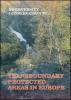
1996
Cooperation at the scale of entire mountain ranges, whether through formal agreements or regional institutions, is widely acknowledged to be desirable. The Caucasus, generally better known for conflict than cooperation, is a major centre of biological, landscape, and cultural diversity.
This report was written as a contribution to Action Theme 10 (mountain ecosystems) of the Pan-European Biological and Landscape Diversity Strategy (PEBLDS). It comprises and introduction to Activity 10.6, on cooperation in mountain ranges, of the PBLDS, followed by a review and assessment of existing mechanisms for inter-governmental cooperation in the Alps.
This workshop brought together representatives of all stakeholder groups from Namibia and Botswana to discuss key natural resource utilisation issues. IUCN sought to begin a crucial cross-border dialogue to address incompatible land and resource uses in the area. This is the first stage in addressing transboundary natural resource management in the area, and clearly focuses on both the ecosystem and the participation of all stakeholders.


The bodiversity of southern Africa depends on water as does the regional economy. Water flows through every economic sector: agriculture, energy, industry, mining, tourism, and fisheries. However, this vital resource is under threat from environmental degradation due to population growth, poverty, climate change and pollution.
Il s'agit du recueil des procès-verbaux de la conférence sur les écosystèmes des forêts denses humides d'Afrique centrale qui a eu lieu à Brazzaville, Congo, du 28 au 30 mai 1996. Il présente les communications des participants qui appartenaient aux milieux gouvernementaux et non-gouvernementaux, au secteur privé, à des agences de bailleurs de fonds multilatéraux et bi-latéraux.