
La gestion compartarget_ida de áreas protegidas en centroamérica
2006
Protected areas are the cornerstone of virtually all national and international conservation policies. About 10% of the world's forests are to be found in protected areas, and Forest Protected Areas make a critical contribution to conservation. The purpose of this publication is to address two questions, both of which are strategic, complex and politically significant: What is, and what is not, a Forest Protected Area?

It has become clear during recent global deliberations on biodiversity conservation that achieving Protected Area (PA) financial sustainability will require major changes in the way that PA funding is conceptualized, captured and used.
The Lunama and Kalametiya lagoons are located on the southeastern coast of Sri Lanka. Part of the Dry Zone of the country, their importance led to their being designated in 1984 as a Sanctuary under the Fauna and Flora Protection Ordinance. The objective of this study was to compile a comprehensive set of baseline data on biodiversity in the Lunama-Kalametiya wetland system in order to facilitate management of this protected area.
The Vth IUCN World Parks Congress held in 2003 in Durban, South Africa was host to a stream of workshops dedicated to the broad topic of building support for protected areas. As a means of providing a more coherent picture, a separate set of workshops was held on communicating the benefits of protected areas. The collection of papers contained within this publication brings together the experience and wisdom of the leading thinkers and practitioners of protected area planning and management.
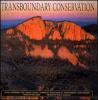
Transboundary conservation areas are environmentally endangered regions that sprawl across international borders and contain multiple protected areas. Recent studies estimate that there are now 188 transboundary conservation areas in 112 countries, making up about 17 percent of the designated protected areas around the world. This book specifically examines 28 of these areas, found across all continents, from Asia to Antarctica, and in several oceans.
El V Congreso mundial de Parques constituyó el encuentro más numeroso de expertos en áreas protegidas que haya tenido lugar hasta ahora. En septiembre de 2003, se reunieron unos 3.000 participantes en Durban, Sudáfrica, durante 10 días de reflexiones, discusiones, debates y creación de redes, a fin de considerar la situación de las áreas protegidas del mundo, los desafíos que se les presentan y las oportunidades que existen cara al futuro.
Le Ve Congrès mondial sur les parcs de lUICN a été le plus grand rassemblement consacré aux aires protégées, En septembre 2003, près de 3000 participants se sont réunis à Durban (Afrique du Sud) en vue de 10 jours de réflexion, déchanges, de débats et de travail en réseau afin de faire la bilan de létat des aires protégées dans le monde, des difficultés rencontrées et des voies davenir.
It is widely acknowledged that Nepal is one of the rich biological treasure chests of South Asia. There are several "hotspots" of biodiversity - areas of high species richness and species diversity, as well as high levels of rare, endangered and endemic species of plants and animals. Efforts towards developing sustainability generally demand an in-depth understanding of the diverse life-forms in nature and their inter-dependence for survival and growth.

Almost half the world's people live in cities and this proportion is steadily growing. Protected areas provide important benefits to cities; conversely, conservationists depend on support from voters, leaders, and opinion-shapers largely concentrated in urban centres. This book's message is that conservationists' success will depend increasingly on taking these urban connections seriously.