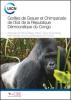
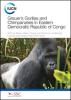
In 2011, the Jane Goodall Institute (JGI) convened conservation partners to develop a conservation action plan for great apes in eastern Democratic Republic of Congo (DRC), with financial support from the Arcus Foundation. The main goal of this initiative was to identify critical threats to gorillas, chimpanzees and their habitats in the landscape, and to develop conservation strategies to address these threats.
Cette publication fournit aux gestionnaires daires protégées terrestres, marines et deau douce des orientations quant à la restauration de leurs valeurs naturelles et autres, aussi bien au niveau du système que du site. Dans la mesure où les circonstances requièrent parfois une restauration qui va au-delà des limites de laire protégée (ex.
Conventional approaches to managing protected areas have often seen people and nature as separate entities. They preclude human communities from using natural resources and assume that their concerns are incompatible with conservation. Protected area approaches and models that see conservation as compatible with human communities are explored. The main themes are co-managed protected areas and community conserved areas.
The IUCN Red List Categories and Criteria were developed for classifying species at high risk of global extinction, i.e. for assessment at the global level. Guidelines on the application of the IUCN Red List Criteria at national or regional levels were also developed and this volume presents the revised guidelines, published in 2012.
This publication provides an overview of the worlds shared water resources and insights for managing these resources. Using case studies from around the world, it describes the benefits to be gained from cooperation and the challenges of constructing legal frameworks, institutions, management processes and financing and partnership strategies to govern transboundary waters equitably and sustainably.
Les Catégories et Critères de la Liste rouge de l'UICN se veulent un système simple et facile à comprendre pour classer les espèces qui risquent de s'éteindre à l'échelle mondiale. L'objectif général du système consiste à fournir un cadre explicite et objectif de classification de la plus large gamme possible d'espèces, selon leur risque d'extinction.
Se pretende que las Categorías y Criterios de la Lista Roja de la UICN constituyan un sistema de fácil comprensión para clasificar especies de alto riesgo de extinción global. El fin general de este sistema es proporcionar un marco explícito y objetivo para la clasificación del espectro más amplio posible de especies según su riesgo de extinción.