This report presents the results of a review of the Poverty Reduction in the Doi Mae Salong Landscape focusing on the achievements of the project in contributing to poverty reduction and issues such as the sustainability and efficiency of the project.
The evaluation of the 2012 World Conservation Congress (Congress) asked whether the Congress can be made more relevant, effective and efficient. This evaluation has been an internal exercise, undertaken by IUCNs Secretariat Planning, Monitoring and Evaluation (PM&E) Unit between September 2012 and March 2013. While the 2012 Congress Participants Survey showed that the Congress was highly appreciated by the participants, a number of suggestions for improvements were made.
This document is divided into three sections. The first examines learning on various aspects of natural resources governance. This is followed by a section focusing more specifically on project implementation, planning and management lessons. Finally, we conclude with some suggestions on possible future niches for IUCN in the natural resources (NR) governance arena.
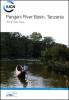
Climate change and the over exploitation of water resources is challenging the sustainability of the Pangani River Basin to deliver water services. Competition for diminishing water resources has led to tensions between the various stakeholders within the basin. Together with the government of Tanzania and donor partners, WANI has responded to this crisis by supporting the implementation of Integrated Water Resources Management (IWRM).
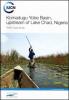
Inappropriate water management practices in the Komadugu Yobe Basin, upstream of Lake Chad in northern Nigeria, changed the seasonal river flow and caused widespread environmental degradation. Coupled with this were fragmented regulation and conflicting responsibilities among institutions, a lack of coordination for hydro-agricultural developments, inequitable access to water resources and growing tensions and risk of conflicts among water users.