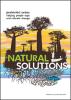
Out of all the biological carbon (or green carbon) captured in the world, over half is captured by marine living organisms --- hence it is called "blue carbon". Although emissions reductions are currently at the centre of the climate change debate, the critical role that oceans and ocean ecosystems play has been vastly overlooked.
This publication identifies and analyzes critical issues in the formulation and implementation of national and sub-national legal frameworks for REDD activities. It is based on substantive findings from four national case studies (Brazil, Cameroon, Guyana and Papua New Guinea) chosen for their varying geographies, forest cover and deforestation rates, and stages of REDD preparations.
This study reviews the financial costs of abating greenhouse gas emissions through Reducing Emissions from Deforestation and forest Degradation (REDD). It is written from the perspective of an institutional investor seeking cost-effective climate mitigation options. A review of empirical data from Brazil and Indonesia suggests that REDD may, in many areas, provide a cost-effective climate mitigation option, with estimated costs lying in a range of US$ 2-10 per ton of CO2e.
Laquaculture fait face actuellement à un défi majeur: comment alléger la pression sur les stocks de poisson causée par la pêche commerciale tout répondant à une demande croissante pour les produits de la mer par des méthodes durables. Lintention de ce guide est de promouvoir le développement durable de laquaculture en Méditerranée et dans ce but il développe des lignes directrices pour de meilleures pratiques en matière de sélection et de gestion des sites.
Protected areas play a major role in reducing climate changing carbon dioxide emissions in the atmosphere. Fifteen percent of the worlds terrestrial carbon stock - 312 gigatonnes - are stored in protected areas around the world. Protected areas also serve as natural buffers against climate impacts and other disasters, providing space for floodwaters to disperse, stabilizing soil against landslides and blocking storm surges.