The IUCN programme in Lao PDR

1998
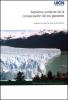
Los glaciares son ecosistemas de fundamental importancia que se encuentran en constante declinación. Para revertir este problema es necesario diseñar y adoptar mecanismos para su adecuada gestión y conservación.
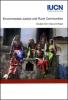
Access to justice in environmental law is a worldwide movement dedicated to assisting members of rural communities to achieve redress for environmental harms.This publication contains a review of the rural environmental justice movement in India and Nepal, illustrated with case studies.
On the 13th and 15th of July 2006, Israel bombed the Jiyyeh power plant. The war on natural resources and people's livelihoods began... The Documentary covers the complicated process that the different national and international parties faced while dealing with the environmental catastrophe. It also exposes the suffering of fishermen who are already struggling to make a living in a complex political and economic environment.
The Present Workshop Report compiles and summaries the papers, the discussions and the recommendations from the Regional Public Hearing Workshop held in Dhaka, Bangladesh 12 February 2006 and from the smaller Follow-Up Workshop 13 February 2006. The Workshop Reports has been compiled by Orbicon and IUCN Bangladesh. The papers are put in the report in the sequence, which would be natural for the reader, and not always in the order they were presented at the workshop.