
Metals from the forests : mining and forest degradation
1999
Finger, Andréa |
Stolton, Sue |
Dudley, Nigel |
The Congo Basin encompasses an enormous region of Central Africa. Up to the present day, the area has a more or less continuous forest cover and is rich in biodiversity. The lowland forest of the Congo Basin for instance, is the most species-rich forest in Africa. In particular species groups of the region, endemism is high.
In order to contribute to the discussion of furthering coherence with respect to the role of the World Bank, this report looks at the various case studies where coherence between World Bank and GEF was either successful or wanting and formulates recommendations to improve operational coherence.
The objective of this bibliography is to provide an overview of available literature (up to January 1997) concerning non-timber forest products (NTFPs) in the tropical forests of Africa. With this publication, the Netherlands Committee for IUCN hopes to facilitate and encourage the work of government institutions, NGOs and others who wish to engage in studies or activities on NTFPs in tropical Africa.
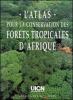
First edited in English, this is the first fully comprehensive study of the current state of the tropical moist forests of Africa. African moist forests, containing well over half the continent's biological diversity, are disappearing at a rate of about 2 per year, the fastest in the world.
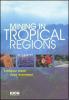
Examines the environmental impact of mining and the mineral industry, with a special emphasis on tropical forests. Two cases are described in detail, the Carajás area in Brazil and the Mt Nimba iron ore project on the border of Liberia and Côte d'Ivoire in West Africa. The report also looks into the environmental cost of Dutch mineral trading and the Dutch involvement in mineral project in rainforest areas.
A fully revised and extended version of a report with the same title, first published in 1989. The book deals with an important but long neglected aspect of the use and management of tropical forests, analyzing the role of the vast array of non-timber forest products in the local and national economies of Southeast Asia. The term "non-timber forest products" encompasses all biological material other than timber which are extracted from forests for human use.

Based on information derived from literature, statistics, interviews and a field survey in Bolivia, this report explores the value of non-timber forest products not only in economic terms but also as an important element in the lives of people who live in or near the forest. Covers values at local, national and international level; intellectual property rights; ecotourism; and sustainability of exploitation with detailed examples.
The report describes the changes that have taken place within conservation movements, in particular regarding their policies on protected areas. Emphasis in the document is on the social aspects of protected areas. National conservation policies and practises in Uganda served as a case study in order to compare overall conservation policies with the experiences of actual implementation of these policies in the field.
