The objective of these guidelines is to help foresters and forest planners improve the contribution of tropical production forests to global efforts to conserve biodiversity. They are intended to update and replace the 1993 ITTO Guidelines for the Conservation of Biological Diversity in Tropical Production Forests.
Conforme hábitats e ecossistemas se tornam cada vez mais alterados e as populações cada vez mais impactadas por atividades humanas, um número crescente de espécies irá exigir alguma forma de manejo de seus indivíduos e populações para garantir sua sobrevivência. O manejo ex situ é uma opção possivel, que pode contribuir para a conservação das espécies ameaçadas.
A medida que los hábitats y los ecosistemas se vuelvan cada vez más alterados, y las poblaciones se ven afectadas para siempre por actividades humanas, un número cada vez mayor de especies requerirá alguna forma de gestión, tanto de individuos como de poblaciones, para asegurar su supervivencia. La gestión ex situ es una opción posible que puede contribuir a la conservación de especies amenazadas.
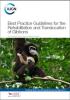
Rehabilitation and translocation programmes are increasingly becoming an important component of conservation action plans for threatened species. Translocation can help address gibbon conservation issues (gibbons are recognized as one of the most threatened primate families globally) by allowing gibbons held in captivity to be rescued, rehabilitated and then returned to the wild.
Approximately one-third of all terrestrial high-biodiversity sites straddle national land borders, yet few man-made boundaries are fixed, and international boundaries often alter over time or disappear altogether. This publication makes the compelling case for transboundary conservation approaches and promotes an array of innovative methods based on contemporary principles.
Invasive alien species (IAS) have been identified as one of the most important direct drivers of biodiversity loss and ecosystem service changes. Many international policy instruments, guidelines and technical tools have been developed to address this threat.
This guidelines outlines one management tool, strategic adaptive management, that has been developed by the staff and managers of Kruger National Park. This approach recognises and is responsive to global change factors in a realistic and practical manner. The guideline aims to present an overview of strategic adaptive management practice, or SAM, as it has emerged within the specific context of Kruger National Park.
As habitats and ecosystems become increasingly altered and populations evermore impacted by human activities, a growing number of species will require some form of management of both individuals and populations to ensure their survival. Ex situ management is one possible option that can contribute to the conservation of threatened species.