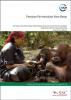
This report aims to contribute to the international effort to combat wildlife crime in Sub-Saharan African protected areas by providing a systematic and evidence-based review of law enforcement practices that have proved to be effective in different situations, and by identifying emerging best practice.
The threatened species categories used in Red Data Books and Red Lists have been in place for almost 30 years. The IUCN Red List Categories and Criteria provide an easily and widely understood system for classifying species at high risk of global extinction, so as to focus attention on conservation measures designed to protect them.
These guidelines are intended for worldwide use, with the aim of facilitating the use of forensic science to the fullest extent possible in order to combat wildlife crime, and in particular, to combat the trade in illegal ivory. They provide guidance on procedures and methodologies for ivory sampling and analysis by different laboratories with appropriate facilities, to support transnational criminal investigations and law enforcement operations.
The threatened species categories used in Red Data Books and Red Lists have been in place for almost 30 years. The IUCN Red List Categories and Criteria provide an easily and widely understood system for classifying species at high risk of global extinction, so as to focus attention on conservation measures designed to protect them.
The IUCN Red List of Ecosystems is a global framework for monitoring the status of ecosystems. It is part of the growing toolbox for assessing risks to biodiversity and aims to support conservation, resource use, and management decisions by identifying ecosystems most at risk of biodiversity loss.
The objective of these guidelines is to help foresters and forest planners improve the contribution of tropical production forests to global efforts to conserve biodiversity. They are intended to update and replace the 1993 ITTO Guidelines for the Conservation of Biological Diversity in Tropical Production Forests.