
Protected areas
A global overview of mountain protected areas on the World Heritage list
2002
Hamilton, Lawrence S. |
Thorsell, J. W. |
A global overview of protected areas on the World Heritage list of particular importance for biodiversity
2000
Jakubowska, Janina |
May, Ian |
Smith, Gemma |
Report on second World conference on national parks
1973
Lucas, P. H. C. |
Protected area management : principles and practice

2001
Worboys, Graeme L. |
Lockwood, Michael |
De Lacy, Terry |
Land reform and conservation areas in South Africa : towards a mutually beneficial approach
1999
Wynberg, Rachel |
Kepe, Thembela |
An increasing number of land reform projects are taking place in conservation areas. Many of these are concerned with the restitution of land rights to people dispossessed of their land, and others are more generally concerned with effecting tenure reform and redistributing land to the disadvantaged and the poor.
Sustainable tourism in protected areas : guidelines for planning and management
2002
Eagles, Paul F. J. |
Haynes, Christopher D. |
McCool, Stephen F. |
The link between protected areas and tourism is as old as the history of protected areas. Though the relationship is complex and sometimes adversarial, tourism is always a critical component to consider in the establishment and management of protected areas. These guidelines aim to build an understanding of protected area tourism, and its management. They provide both a theoretical structure and practical guidelines for managers.
Directory of protected areas in East Asia : people, organisations and places
2002
Hayes, Shelley |
Egli, Daniel |
Communication and co-operation among all conservation bodies and concerned individuals are vital to effective conservation and to securing the funding and other resources needed. Only by forming productive links among all protected area organisations and initiatives in the region can the aim of the East Asia Action Plan be realised.
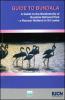
Guide to Bundala : a guide to the biodiversity of Bundala national park, a Ramsar wetland in Sri Lanka
2001
Bambaradeniya, Channa N. B. |
In 1990, the Bundala lagoons of Sri Lanka became the country's first Ramsar site, a wetland of international importance for migratory waterfowl. In 1992, Bundala was upgraded to a National Park. This guide to the habitats, animals and plant species currently present in Bundala National Park stems from a survey on the status of the park's biodiversity conducted by IUCN's Country Office in Sri Lanka. It is hoped that this guide will raise awareness of this important protected area.