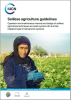
Soilless agriculture is a modern technology created to enable growing crops in an environment where traditional technologies are median. Several techniques stem from soilless agriculture e.g. hydroponics and aquaponics. Limited water resources, variations of precipitation and frequent droughts are typical challenges for arid areas. Hydroponics offer solutions to rationalize water consumption in arid to semi-arid areas particularly when agriculture is a main activity in those areas.
This monograph first describes the popular types of accounting usually followed in case of freshwater resources. Second, it reviews some fo the successful examples of accounting done in select countries from all over the world and focuses on lessons learnt from doing such an exercise in a developing country like India. Third, the change in the quality of water over the period 1993-2003 has been computed for surface water and groundwater.
This guide emphasizes the ecological goals that are nowadays set in every hydraulic engineering planning. It uses several examples to show how modern flood protection can create living rivers. The examples of successful river revitalization documented in this book are groundbreaking.
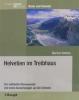
This book provides a wealth of factual material to prove that we are indeed experiencing worldwide climate change. The main focus of the book is on Switzerland. It demonstrates how climate change affects mountainous regions and glaciers, agriculture, forests, but also the tourism industry. Switzerland is getting warmer - and our everyday life is affected.
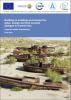
This capacity needs assessment identifies opportunities for institutional capacity development to strengthen multi-sectoral planning and implementation in order to create an enabling environment for nexus perspectives in Central Asia. It should not be viewed as a static capacity building plan, but rather as a catalogue to develop appropriate activities and strategies that can be further adjusted if necessary.
This institutional analysis looks at existing institutional arragements, provides insights into barriers and opportunities of the practical application of the water-energy-food security nexus in Central Asia and considers options for improved multi-sectoral dialogue and cooperation.