
Répertoire des zones humides d'Afrique
1992
Bernacsek, G. M. |
Hughes, J. S. |
Hughes, R. H. |
There is today a growing awareness that many wetlands are more valuable in their natural, or only slightly modified state, than if drained, dyked or built upon. Past neglect of wetlands has meant that there is insufficient material available on policy guidance, planning techniques, or management methodologies for their conservation and sustainable use in different regions.
There is today a growing awareness that many wetlands are more valuable in their natural, or only slightly modified state, than if drained, dyked or built upon. Past neglect of wetlands has meant that there is insufficient material available on policy guidance, planning techniques, or management methodologies for their conservation and sustainable use in different regions.
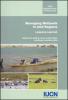
At the close of a 15-year regional programme to build institutional capacity for wetland resources management in West Africa, it was deemed essential to extract and review the lessons learned through this experience. This publication stems from the findings of a study carried out to analyse the experience as a whole and shed light on the successes, shortcomings, strengths and weaknesses of the programme as implemented.

This report has been developed through a collation and analysis of reliable, up-to-date data, using an interdisciplinary approach and also recognizing that wetland ecosystems should be conserved and developed in a sustainable manner.
With increasing demands on the water of the Pangani River Basin, coupled with a decreasing catchment runoff due to climate change, water resources are becoming increasingly scarce, and leading to conflicts among users.
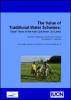
Sri Lanka has one of the oldest traditions of irrigation in the world. The economy and human settlements of early Sri Lankan society were organized around the ancient water tank (water storage reservoir) irrigation systems. These traditional tank systems thus form a vital component of both the natural and manmade landscape in Sri Lanka.
Wetlands are vital to the livelihoods of hundred of millions of people residing in the Lower Mekong region, and particularly to the food security of many of the rural poor. This document reports on a study whose aim was to provide guidance on the use of environmental economic assessment methodologies to support wetlands management for poverty alleviation.