The symposium ‘Beyond enforcement: communities, governance, incentives and sustainable use in combating wildlife crime’ was organise to explore the role of communities in tackling illegal wildlife trade. The primary objective of the meeting was to explore whether and under what circumstances community-based interventions are likely to achieve success in combating current patterns of illegal use and trade of wildlife (plants and animals).
This report aims to contribute to the international effort to combat wildlife crime in Sub-Saharan African protected areas by providing a systematic and evidence-based review of law enforcement practices that have proved to be effective in different situations, and by identifying emerging best practice.
This guide aims to increase the knowledge of birdwatchers and other nature-lovers about Georgia's nature.
La présente analyse de situation a été réalisée pour éclairer les réponses à plusieurs résolutions formulées lors du 5 Congrès mondial de la nature en 2012, concernant l'état critique des grands vertébrés d'Afrique centrale et de l'Ouest.
This situation analysis was undertaken to inform responses to several resolutions made at the 5th World Conservation Congress in 2012 about the plight of large vertebrates in West and Central Africa. It draws on a wide range of information to provide information on the status of these species, important sites, pressures, legislation, the effectiveness of protected areas, and both community-based incentives for conservation and institutional responses.
As one of the world’s leading field biologists, author George Schaller has spent much of his life traversing wild and isolated places in his quest to understand and conserve threatened species. Tibet Wild is Schaller’s account of three decades of exploration in the most remote stretches of Tibet. As changes in the region accelerated over the years, with more roads, homes, and grazing livestock, Schaller watched the clash between wildlife and people become more common—a
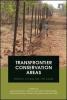
The introduction of transfrontier conservation areas (TFCAs) in Southern Africa was based on an enchanting promise, with cross-border collaboration and ecotourism becoming vehicles of this promise. This book focuses on the forgotten people displaced by, or living on the edge of, protected wildlife areas.
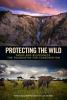
A companion volume to Keeping the Wild: Against the Domestication of Earth, Protecting the Wild provides a necessary addition to the conversation about the future of conservation in the so-called Anthropocene. Even as the biodiversity crisis accelerates, a growing number of voices are suggesting that protected areas are passé. Protecting the Wild offers a spirited argument for the robust protection of the natural world.
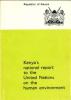
In response to the United Nations General Assembly resolution 2398 (XXIII), steps were taken by the Kenya Government early in 1971 to participate in the United Nations Conference on the Human Environment in 1972. In April 1971, a Working Committee on the Human Environment in Kenya was set up under the chairmanship of the Permanent Secretary for Natural Resources.