
The phenomenon of Baikal
2004
Shumkin, Gennady |
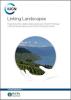
This study identifies the relationships that exist between World Heritage cultural landscapes and protected areas, and documents the practical management and governance associations that occur between them. It looks at i) the conceptual similarities and differences between these two systems of conservation designations; ii) the spatial overlap between them; and iii) the practical interrelation and integration that occurs ‘on the ground’.
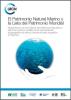
The marine World Heritage thematic study was written to provide guidance to States Parties and conservation practitioners on how to best apply the World Heritage Convention in the oceans and seas. The study proposes a scientific framework as the foundation for a well-balanced and representative set of features that may be of Outstanding Universal Value to inform choices when nominating or inscribing sites.
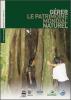
This Resource Manual has a specific purpose: helping to manage natural values within World Heritage properties. As such it is aimed at natural and mixed World Heritage properties as well as cultural landscapes (inscribed under cultural criteria). The intention is to help managers understand and incorporate World Heritage concepts and processes into natural site management.
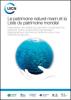
L’étude thématique sur le patrimoine mondial marin a été rédigée dans le but d’apporter des orientations aux États parties et aux praticiens de la conservation sur les meilleurs moyens d’appliquer la Convention du patrimoine mondial dans les océans et dans les mers.
The marine World Heritage thematic study was written to provide guidance to States Parties and conservation practitioners on how to best apply the World Heritage Convention in the oceans and seas. The study proposes a scientific framework as the foundation for a well-balanced and representative set of features that may be of Outstanding Universal Value to inform choices when nominating or inscribing sites.
The aim of this research is to: 1) identify the negative impact of conservation policies implemented in living World Heritage sites on the social quality of traditional communities; 2) develop a design tool constraining spatial morphology to overcome the negative influences on the social quality The study leads to a new approach to conservation planning that takes into account sustaining social quality while enforcing UNESCO World Heritage conservation program.