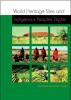
This book includes twenty case studies of World Heritage sites from around the world that explore, from a human rights perspective, indigenous peoples’ experiences with World Heritage sites and with the processes of the World Heritage Convention.
A large number of approaches have been developed over the last four decades for identifying places of significance for biodiversity, but unfortunately this requires looking at multiple, disconnected databases and other information sources to understand the sites of importance in a particular area.
This study identifies and assesses the diversity of ecosystem services, and in turn the benefits that World Heritage sites can deliver to society and the economy through direct and indirect use or through inherent 'non-use' values. It also aims to increase awareness and understanding of the multiple services and benefits that ecosystems can provide as well as their contribution to the well-being of local, national and global communities.
Natural World Heritage sites are internationally recognized as having the highest global conservation significance and include iconic places such as the Serengeti, Great Barrier Reef and the Galapagos Islands. These renowned sites offer crucial insight into the successes and challenges on the frontlines of conservation, but only about half of the natural sites have been regularly monitored through the main monitoring mechanisms of the World Heritage Convention.
El objetivo preciso de este manual de referencia es coadyuvar a la gestión de los valores naturales en los bienes del Patrimonio Mundial. Por ello su meta son los bienes, naturales y mixtos, del Patrimonio Mundial y los paisajes culturales (inscritos en función de criterios culturales). La intención es ayudar a los administradores a entender los conceptos y procesos del Patrimonio Mundial e incorporar dichos conceptos y procesos a la gestión de los sitios naturales.
Los principales objetivos de este manual de referencia son a: ayudar a los administradores y a las autoridades encargadas de la gestión de bienes del Patrimonio Mundial natural y cultural a reducir los riesgos que corren esos bienes debido a los desastres tanto naturales o provocados por los seres humanos; exponer los principios fundamentales de la gestión de los riesgos de desastres (GRD) para el patrimonio y ofrecer una metadología para identificar, evaluar y mitigar los riesgos de de
The manual is based on the version of the "Operational Guidelines for the Implementation of the World Heritage Convention" dated August 2011 and seeks to complement it. In particular, the manual seeks to support States Parties in implementing the World Heritage Convention and to provide guidance and knowledge that will help ensure a credible World Heritage List of well-managed properties of Outstanding Universal Value.