Status of conservation in west Malaysia

1969
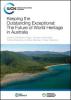
This publication was generated following a 2012 symposium in Cairns, Australia. The publication is the primary output from Australia marking the 40th anniversary 'Year of the World Heritage Convention' celebrated by UNESCO in 2012. The book contains 30 chapters including stimulating points of view from all sectors on the future of World Heritage and a wide range of case studies of best management from all sectors. A key component of this publication is the Cairns Communiqué.
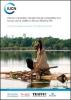
This report brings together a broad range of new and existing information on 2,358 plant and animal species of the Albertine Rift (AR) region of East and Central Africa. A collaborative project assessed the climate change vulnerability of all known Albertine Rift mammals, birds, reptiles, amphibians and fish, as well as a range of plants, whilst simultaneously gathering detailed information on their use by humans.

Ce document a pour objectif de définir un cadre permettant aux compagnies forestières adhérant à la certification du Forestry Stewardship Council (FSC) de catalyser la préservation des grands singes africains. Nous présentons des lignes directrices spécifiques et des considéra-tions pratiques de collaboration entre les responsables de lexploitation forestière et de la conservation afin de préserver la vie sauvage.
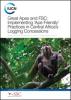
The objective of this document is to outline a framework within which logging companies adhering to Forestry Stewardship Council (FSC) certification can be the catalyst needed to ensure the long-term preservation of African great apes. Specific guidelines and practical considerations are provided as to how and why forestry and conservation practitioners should col-laborate in maintaining wildlife.
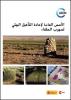
Cette publication s'adresse principalement aux techniciens, gestionnaires et chercheurs des steppes semi-arides de la Méditerranée occidentale dans le but de leur fournir un guide utile et pratique sur la restauration écologique de la steppe. Elle contient des informations sur les expériences et les mesures récentes qui permettent d'augmenter la résilience de ces socio-écosystèmes steppiques.