IUCN Global Standard for Nature-based Solutions : first edition (Korean version)
The IUCN Global Standard for Nature-based Solutions lists the Criteria and Indicators, as adopted by the 98th Meeting of the IUCN Council in 2020.
Os Painéis Independentes de Assessoria Técnica e Científica (ISTAPs) são formados para ajudar a tratar de uma série de questões controversas de conservação e desenvolvimento que surgem com frequência e complexidade crescentes nos níveis nacional e global.
Independent Scientific and Technical Advisory Panels (ISTAPs) have been established to help address a range of controversial conservation and development issues that have emerged with growing frequency and complexity at national and global levels.
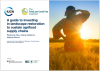
This guide provides information and reasoning as to why it is important for agribusinesses to engage in nature-positive business practices, and why landscape restoration is an effective solution to issues related to degradation of landscapes and natural capital on which agribusinesses depend.
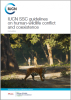
As human-wildlife conflicts become more frequent, serious and widespread worldwide, they are notoriously challenging to resolve, and many efforts to address these conflicts struggle to make progress. These Guidelines provide an essential guide to understanding and resolving human-wildlife conflict. The Guidelines aim to provide foundations and principles for good practice, with clear, practical guidance on how best to tackle conflicts and enable coexistence with wildlife.
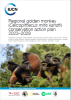
The golden monkey, Cercopithecus mitis kandti, an Endangered subspecies of blue monkey, is found in only two small populations in the central part of the Albertine Rift region in Central/East Africa.
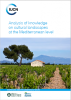
Being defined as the “combined works of nature and of man”, cultural landscapes focus on sustainable land-use techniques, where the local population take into consideration the limits of the natural environment. They constitute a traditional form of land-use that are beneficial for the biological diversity and the cultural diversity for human well-being.
Complete summary of the scientific knowledge currently available on closing of the knowledge-implementation gap in both terrestrial and aquatic ecosystems. Describes interdisciplinary and innovative uses of knowledge sources and knowledge mobilization practices to halt biodiversity loss under human-driven global environmental change.
NbS are increasingly seen as a way to meet the objectives of several global agreements and can be central to a just transition – if the right mix of just transition policies are implemented. But there is currently no guarantee that NbS will generate decent work.