Parcs et réserves du Burundi : évaluation de l'efficacité de la gestion des aires protégées

2011
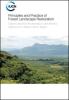
This book presents the results of an international research project, which was designed explicitly to examine application of the forest landscape restoration (FLR) approach to dryland forest ecosystems in Latin America. In order for FLR to be transferred into mainstream practice that is adopted and promoted by governments and the private sector, as well as by local communities, information is needed on how the principles of FLR can be implemented in practice, in a cost-effective manner.
The purpose of these guidelines is to update and expand the original guidelines on protected areas legislation published in 1980 and to reflect new developments and emerging issues. These developments include significant advances in international environmental law, and an improved scientific understanding of the role of protected areas in nature conservation, including conserving biodiversity, maintaining ecosystem functions and supporting sustainable development.
Ce rapport présente une évaluation préliminaire des Zones importantes pour les plantes en Méditerranée méridionale et orientale, plus lAlbanie. Dix recommandations ont été formulées, qui contribueront à orienter les actions de conservation de la flore sauvage en Méditerranée. La mise en oeuvre effective de ces recommandations permettra daméliorer à long terme lenvironnement et la qualité de vie des habitants dans cette région unique.
These guidelines were drafted by the Re-introduction Specialist Group of the Species Survival Commission, and approved by the 41st Meeting of IUCN Council in May 1995. The definition of "re-introduction" is "an attempt to establish a species in an area which was once part of its historical range, but from which it has been extirpated or become extinct".
These guidelines were drafted by the Re-introduction Specialist Group of the Species Survival Commission, and approved by the 41st Meeting of IUCN Council in May 1995. The definition of "re-introduction" is "an attempt to establish a species in an area which was once part of its historical range, but from which it has been extirpated or become extinct".
These guidelines were drafted by the Re-introduction Specialist Group of the Species Survival Commission, and approved by the 41st Meeting of IUCN Council in May 1995. The definition of "re-introduction" is "an attempt to establish a species in an area which was once part of its historical range, but from which it has been extirpated or become extinct".

The Convention on biological diversity is an historic committment by the world's nations to conserve biological diversity, to use biological resources sustainably and to share equitably the benefits arising from the use of genetic resources. It is the first global legal instrument to comprehensivly address all aspects of biological diversity. The guide illustrates the scientific, technical and legal issues which the Convention raises.

The Convention on Biological Diversity is an historic committment by the world's nations to conserve biological diversity, to use biological resources sustainably and to share equitably the benefits arising from the use of genetic resources. It is the first global legal instrument to comprehensivly address all aspects of biological diversity. The guide illustrates the scientific, technical and legal issues which the Convention raises.