
State of Lebanon's forests 2007
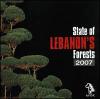
2007
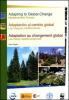
This book, in English, French and Spanish, provides an overview of the Mediterranean forest conservation and management challenges posed by climate change. It addresses relevant issues, like forests vulnerability to climate change and past climate change responses which may guide future policies and actions.
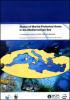
The main aim of this report is to assess progress towards a network of ecologically representative and effectively managed MPAs that meets international obligations for conservation of the Mediterranean Sea. Specifically, results of this survey were used to measure Mediterranean progress towards the CBD targets of establishing a coherent network of MPAs by 2012 and to protect at least 10% of the Mediterranean Sea by 2010.
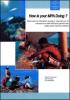
IUCN, WWF and the US National Oceanic and Atmospheric Administration (NOAA) have developed this guidebook to assist marine protected area (MPA) managers in assessing the performance of their MPA. Based on this assessment, it shows how necessary changes can be made to improve management measures.

In the wake of the 2004 Indian Ocean tsunami, four organizations, Both ENDS, World Wide Fund for Nature, Wetlands International and IUCN Netherlands Committee, implemented Green Coast: for nature and people after the tsunami, to assist the tsunamiaffected countries in Asia: India, Indonesia, Sri Lanka, Thailand and Malaysia.
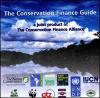
The Conservation Finance Guide presents a host of potential financing opportunities for nature conservation in general, with a special focus on protected area management. Many of these finance mechanisms rely on a "market-based" approach, valuing and marketing the goods and services that a protected area generates in support of local livelihoods and the broader economy.
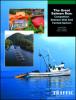
This report examines economic and policy issues related to wild and farmed salmon in North America. These issues have received a great deal of attention in recent years, reflecting the environmental, economic and cultural importance of salmon to Americans and the fact that salmon issues span many important policy debates ranging from environmental protection to trade policy.

TRAFFIC's findings in this report provide strong evidence that China's trade ban has been effective at reducing the market for Tiger products, particularly traditional medicines. Still, illegal trade remains a threat. China's progress in Tiger conservation, especially Tiger trade, would almost certainly be undone if China's market for Tiger products were re-opened.
In this groundbreaking text, forest quality is discussed as a useful new concept in forest conservation and management. Three main assessment criteria are used: authenticity, environmental benefits, and social and economic benefits. A methodology and protocol for collecting and analysing data is described, and the approach needed with each indicator is outlined in detail.
