This special issue Global Re-introduction Perspectives provides 62 case-studies covering invertebrates, fish, amphibians, reptiles, birds, mammals and plants. The case-studies have been presented in an organized format in the following order Introduction, Goals, Success Indicators, Project Summary, Major Difficulties Faced, Major Lessons Learned, Success of Project with reasons for success or failure. These case-studies are vividly illustrated with color photographs.
The Framework for management effectiveness developed by the IUCN World Commission for Protected Areas was published in the first version of this Best Practice Guideline. It is further explained and interpreted, although not substantially altered, in this version. A number of key guidelines for good practice in evaluation are presented from many practitioners around the world, and important needs and directions for the future are identified.
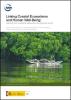
This technical report uses the framework of the Millennium Ecosystem Assessment to extend awareness on the value of coastal ecosystems, their products and services for human well-being (i.e. livelihood security and development benefits) and shows how economic valuation of coastal ecosystem services can be a valuable tool for conservation managers and development decision-makers. It presents case studies from Sri Lanka and Thailand.
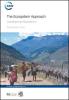
This book follows applications of the Ecosystem Approach over a 5-10 year period in five locations. Key findings include the vital importance of a full stakeholder analysis, of market analysis and of the promotion of institutional evolution.
This publication is a collection of selected case studies representative of the application of the Ecosystem Approach under different ecological, social, economic and cultural contexts in Latin America.
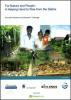
In the wake of the 2004 Indian Ocean tsunami, four organizations, Both ENDS, World Wide Fund for Nature, Wetlands International and IUCN Netherlands Committee, implemented Green Coast: for nature and people after the tsunami, to assist the tsunamiaffected countries in Asia: India, Indonesia, Sri Lanka, Thailand and Malaysia.
This book (published in French) consists of nine articles written by environmental lawyers from the region, regrouped around three themes: Chapter I deals with convergences and divergences of national legal frameworks, and provides illustrations from a number of countries and subjects; Chapter II considers a selection of legal frameworks for three types of ecosystems (forests, a river basin, and marine and coastal areas); Chapter III considers the implementation of international law and reg
La presente publicación recoge algunos de los estudios de caso y de las discusiones del taller, así como otras iniciativas presentadas por miembros de la UICN en la región con el objetivo de compartir estas experiencias en las reuniones preparatorias de la novena Conferencia de las Partes del CDB la revisión del EE es uno de los temas principales de la agenda y en el próximo Congreso de la Unión Mundial de la Naturaleza.
Análisis de las razones del por qué quienes se dedican al desarrollo, no pueden ignorar que muchas poblaciones pobres dependen de los recursos naturales. La publicación presta particular atención al potencial de la conservación para contribuir activamente con el desarrollo sustentable a largo plazo y con la reducción de la pobreza.