
Improving the assessment of pure ecological harm
2023
Elisa Akin, Cenay Aliye |
Invasive alien species (IAS) are a major, accelerating driver of biodiversity loss and ecosystem degradation across Africa, with growing implications for water security, food systems and rural livelihoods. The IUCN Save Our Species (SOS) African Wildlife Initiative (SOS AWI)—funded by the European Union—supports locally led, science-based action to reduce key biodiversity threats, including IAS, through practical management, restoration and capacity strengthening.
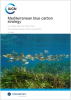
The Mediterranean blue carbon strategy aims to establish a comprehensive framework for the protection, restoration, and sustainable management of blue carbon ecosystems, such as Posidonia oceanica meadows and other seagrasses. These ecosystems are vital for climate change mitigation, carbon storage, and providing essential services like biodiversity, coastal protection, and sustainable livelihoods.

The development of linear transport infrastructure (LTI) can have a variety of direct and indirect impacts on protected and conserved areas (PCAs) and other intact areas with high biodiversity and ecological connectivity values. Poorly planned and constructed roads, railways and canals can sever habitats, disrupt ecosystems and threaten species.
Connectivity conservation is essential for managing healthy ecosystems, conserving biodiversity and adapting to climate change across all biomes and spatial scales. Well-connected ecosystems support a diversity of ecological functions such as migration, hydrology, nutrient cycling, pollination, seed dispersal, food security, climate resilience and disease resistance.

Connectivity conservation is essential for managing healthy ecosystems, conserving biodiversity and adapting to climate change across all biomes and spatial scales. Well-connected ecosystems support a diversity of ecological functions such as migration, hydrology, nutrient cycling, pollination, seed dispersal, food security, climate resilience and disease resistance.

Connectivity conservation is essential for managing healthy ecosystems, conserving biodiversity and adapting to climate change across all biomes and spatial scales. Well-connected ecosystems support a diversity of ecological functions such as migration, hydrology, nutrient cycling, pollination, seed dispersal, food security, climate resilience and disease resistance.
This report has been prepared as part of an effort by IUCN to define its position on Nature-based Solutions (NbS) and plan for future work to advance this concept and support effective implementation of NbS to enhance ecosystem services provision and address societal challenges. The report proposes a definitional framework for NbS, including a set of general principles for any NbS intervention.

En ecosistemas terrestres, dulceacuícolas y marinos, los corredores ecológicos son una designación de conservación necesaria para asegurar la salud de los ecosistemas. Los corredores son elementos fundamentales de las redes ecológicas para la conservación y complementan los objetivos de las áreas protegidas y OMEC al conectar estos hábitats con otras áreas naturales intactas.

La connectivité écologique est le mouvement sans entrave des espèces et le flux des processus naturels qui soutiennent la vie sur Terre. Il est impérieux que les pays du monde entier s’orientent vers une approche globale et cohérente de la conservation de la connectivité écologique, et qu’ils entreprennent de mesurer et de contrôler l’efficacité des efforts déployés en ce sens pour ainsi établir des réseaux écologiques fonctionnels.