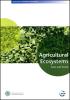
The rapid increase in food prices in many countries has led to substantial media attention on agriculture. We hope that providing this Facts and Trends publication will help uncover some key trade-offs that mean extremely challenging decisions for governments, farmers, consumers and industry. This publication does not attempt to cover everything there is to know about agricultural ecosystems.
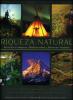
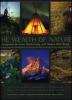
What makes our planet's natural treasures worth saving, and why should we care? With hundreds of stunning full-color photographs and more than twenty essays from some of the world's most respected scientists, this latest publication in the CEMEX Conservation Book Series aims to provide some of these answers. With scientific analyses, The Wealth of Nature offers a detailed explanation of the various ecosystem services that support and regulate all natural processes on Earth.
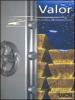
Value is a practical guide that explains the most important steps and techniques for the valuation of ecosystem services, and the incorporation of its results in decision making. It explains, step by step, how to generate persuasive arguments for more sustainable and equitable development decisions in water resources management.
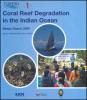
Since the 1998 coral bleaching and mortality, which affected reefs throughout the tropics, a number of projects dealing with research, monitoring and management of coral reefs have been conducted. A number of these projects have been carried out under the CORDIO Program in the Indian Ocean where coral reefs have been severely impacted by bleaching related mortality and other anthropogenic influences.
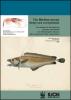
Joint initiative between IUCN and WWF for addressing the need to protect the highly valuable deep sea ecosystems in the Mediterranean. Is included for the first time a comprehensive proposal for conservation firmly based in virtually all scientific information currently available.
Value is a practical guide that explains the most important steps and techniques for the valuation of ecosystem services, and the incorporation of its results in decision making. It explains, step by step, how to generate persuasive arguments for more sustainable and equitable development decisions in water resources management.
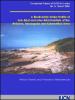
Being an island, Sri Lanka is rich in coastal and marine habitats. Sub-target_idal habitats such as coral and rocky reefs are abundant, along with large soft bottom habitats. In addition, inter-target_idal and coastal habitats are an important part of the marine ecosystem and provide shelter for a large number of plant and animal species.