
Podstawy wdrazania programu rolnosrodowiskowego i zalesieniowego
2003
Metera, Dorota |
Kwiatkowska, Ludmila |

The aims of the workshop were to enhance individual and institutional capacity to : address the environmental aspects of trade issues that will arise as a result of Chinas WTO membership; participate in WTO negotiations and develop proactive positions in the WTO; implement the Convention on Biological Diversity and the Cartagena Protocol on Biosafety, and improve the implementation of CITES; and increase local and national support for the integration of trade, biodiversity conservation and s
IUCN, WWF and the US National Oceanic and Atmospheric Administration (NOAA) have developed this guidebook to assist marine protected area (MPA) managers in assessing the performance of their MPA. Based on this assessment, it shows how necessary changes can be made to improve management measures.
African elephants are confronted with habitat loss and degradation and increasing levels of human elephant conflict. Management authorities in sub-Saharan Africa are increasingly turning to translocation as a means to meet such challenges. This trend has to take into account changing political and welfare considerations for elephants, and managers need to understand the justification for translocation as well as the technical challenges.
Until well into recent times, a high level of connectivity existed among ecosystems. Through the ever-increasing extent and intensity of human exploitation of natural resources, however, the pattern of human activities as islands in a sea of nature has become reversed in most of the worlds regions. Habitat fragmentation is now one of the most important causes of the decline in biodiversity.
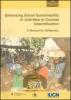
In West Africa, desertification threatens the living conditions of over 250 million people. The results of projects to combat desertification undertaken over the last 40 years or so have been mixed. One reason for this is probably that technical or technological approaches have taken precedence over the sociological approach.
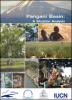
The Pangani River Basin covers an area of about 43,650 km2, mostly in Tanzania with approximately 5% in Kenya. The Basin contains a wide array of resources of which water and arable land are arguably the most important to its 3.7 million Tanzanian inhabitants. There is a diversity of interests in the Basin, and these are able to wield various degrees of power as they seek to lay claim to its resources.
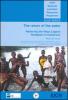
This book tells the story of times past, when wetlands were considered as wastelands and decision makers and managers were unaware of their benefits, a time when the adverse impacts of hydropower and irrigation schemes on ecosystems and people downstream seemed unimportant. Today wetland ecosystems are viewed as essential elements in integrated river basin planning, which draws upon the most appropriate modern science and traditional knowledge.
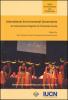
With good governance firmly entrenched on the international agenda, this publication analyses the trends affecting protected area governance at the international level, and goes on to explore emerging issues concerning certification, standards, partnerships and funding mechanisms.
This guide has been prepared by the IUCN Environmental Law Programme and the Foundation for International Environmental Law and Development (FIELD), in cooperation with the World Resources Institute (WRI).