Forest landscape restoration opportunity assessment for Uganda
2016

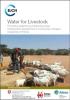
This booklet provides an overview of the approaches and lessons learnt as a result of the implementation of the pilot phase of the ‘Water for Livestock Project’ in the arid and semi-arid lands of Kenya by International Union for Conservation of Nature (IUCN), the Kenya Red Cross Society, and Adeso.

In recent years, awareness has risen surrounding the crucial role of insects in providing ecosystem services and on the acute decline of many of them. However, significant gaps in knowledge still remain. In this context, the European Commission has undertaken to fund the European Red List of Grasshoppers, Crickets and Bush- Crickets, which provides the first ever comprehensive assessment of the extinction risk of all Orthoptera species native to Europe.

Our oceans and coasts are the origin of life on earth, an important food source, and crucial for the global ecological equilibrium, yet despite their global significance, marine and coastal ecosystems face a wide array of threats. It was in the spirit of making enhanced concerted efforts at the global, regional, national and local levels that the Blue Solutions Initiative was created.

This publication is a result of the Blue Solutions’ third Regional Forum for Oceans, Coasts and Human Well-Being in Africa held in spring 2016. It compiles 32 blue solutions from Africa, most of which were presented during the event. The solutions summarised in this publication focus on topics such as marine protected areas, sustainable tourism, sustainable fisheries, sustainable livelihoods, conservation of resources and biodiversity as well as mitigation of the effects of climate change.

These bylaws were developed through a consultative process involving stakeholders of the Building Drought Resilience (BDR) Project implemented by IUCN with funding from Austrian Development Cooperation (ADC). The goal of the bylaws is to support the sustainable management of land and water resources in the Lower Tana River Catchment through enhanced natural resource governance in order to build resilience of communities to drought.

These bylaws were developed through a consultative process involving stakeholders of the Building Drought Resilience (BDR) Project implemented by IUCN with funding from Austrian Development Cooperation (ADC). The goal of the bylaws is to support the sustainable management of land and water resources in the Lower Tana River Catchment through enhanced natural resource governance in order to build resilience of communities to drought.