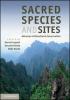
This book provides new insights into biocultural diversity conservation. It explores sacred landscapes, sites, plants and animals from around the world to demonstrate the links between nature conservation and spiritual beliefs and traditions. Key conceptual topics are connected to case studies, as well as modern and ancient spiritual insights, guiding the reader through the various issues from fundamental theory and beliefs to pratical applications.
This paper focuses on interventions in the Benet landscape of Uganda which sought to improve the income opportunities for inhabitants through efforts to rehabilitate the degraded landscape.
The overarching objective of this framework is to contribute to the integration of biodiversity and ecosystem services (BES) into business activities and to firmly position BES conservation among the private sector by engaging the top management of companies in the development, implementation and disclosure of BES policies and practices, in order to reduce risks, manage related impacts and seize opportunities.
Although there is a common agreement on the importance of conservation of Mediterranean submarine canyons amongst international organizations, their governance is complex: the canyons' extension covers waters and seabeds under various types of jurisdictions (territorial waters, Fisheries Protection Zone, Ecological Protection Zone, including delimitation issues).
The Xe Champhone wetlands in Savannakhet Province is one of two wetlands designated as Ramsar sites upon Lao PDRs accession to the Convention on Wetlands (Ramsar Convention) in 2010. Initial steps have been taken to set up a Ramsar committee tasked with managing the site. However, to date, the only conservation activities that have occurred at the site to date have been a very small selection of international donor funded projects.