
Classification et utilisation des espaces naturels protégés et des aires culturelles
1973
Dasmann, Raymond Fredric |
There are a multitude of limiting factors preventing ecosystems, communities, organisms and individuals from adapting to change. Ecological and physical limits comprise the natural limitations to adaptation, associated largely with the natural environment, ranging from ecosystem thresholds to geographical and geological limitations.
This review assessed the suitability of various frameworks, approaches and tools for conducting vulnerability assessments, for use in the EU funded IUCN project Building Resilience to Climate Change in Coastal Southeast Asia. In particular their suitability for use at the provincial, community, and household/individual levels of analysis was emphasised.
This report presents a rapid assessment of the vulnerability to climate change of coastal habitats and selected species in the eight focal areas of the IUCN project Building coastal resilience in Vietnam, Cambodia and Thailand: Koh Kong and Kampot (Cambodia), Chanthaburi and Trat (Thailand), and Ben Tre, Can Gio, Kien Giang and Soc Trang (Vietnam).
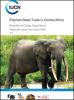
The IUCN/SSC African Elephant Specialist Group AfESG) has been charged by MIKE with implementing a project to investigate the linkages between the elephant meat trade and larger social and economic dynamics at play, including, but not limited to, ivory trade, logging (legal and illegal), mining, infrastructure development, global economic trends, law enforcement at the national and international level, and community forest governance.
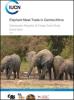
The objective of the study is to enhance knowledge of contemporary elephant bushmeat market dynamics, patterns and trends in north-eastern DRC and determine the impact of elephant meat trade on the Okapi Faunal Reserve (OFR) population.

This pilot study was instigated by the Monitoring of Illegal Killing of Elephants (MIKE) programme of the Convention on International Trade in Endangered Species (CITES) and is being implemented by the IUCN African Elephant Specialist Group (AfESG). It seeks to explore the many causes and motivations driving the illegal killing of elephants, particularly the trade and commerce of elephant meat and ivory.
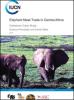
The pilot study presented in this report is part of an International Union for Conservation of Nature (IUCN) African Elephant Specialist Group (AfESG) project initiated by the Monitoring the Illegal Killing of Elephants (MIKE) programme of the Convention on International Trade in Endangered Species (CITES). The project aims to improve understanding of the impact of elephant meat trade on elephant populations in Central Africa.
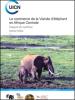
L'objectif global de l'étude est d'améliorer les connaissances de la dynamique actuelle et les tendances du marché de la viande d'éléphant dans les pays d'Afrique centrale en procédant à une étude de l'impact du commerce de la viande d'éléphant. Les résultats visent à créer une série de variables de données de référence qu'on pourra ensuite suivre afin d'évaluer les tendances du commerce de la viande et de l'ivoire au niveau du site.
The overall objective of the study is to enhance knowledge of contemporary elephant meat market dynamics, patterns and trends in Central African countries by undertaking an elephant meat trade impact study. The results aim to establish a baseline data set of variables that can subsequently be monitored to assess trends in meat and ivory trade at the site level.