A toolkit for the economic analysis of invasive species
2008
Emerton, L. (Lucy) |
Howard, Geoffrey W. |
The environmental movement has made huge progress over the last decades. Among others, it has raised awareness of challenges facing humanity, helped develop a critical mass of policies, and worked towards the implementation of many of these policies in collaboration with other stakeholders. Now, however, we are at a turning point in the history of the global environmental movement.
IUCN's Protected Areas Management Categories, which classify protected areas according to their management objectives, are today accepted as the benchmark for defining, recording and classifying protected areas.They are recognized by international bodies such as the United Nations as well as many national governments. As a result, they are increasingly being incorporated into government legislation.
IUCN's Protected Areas Management Categories, which classify protected areas according to their management objectives, are today accepted as the benchmark for defining, recording and classifying protected areas.They are recognized by international bodies such as the United Nations as well as many national governments. As a result, they are increasingly being incorporated into government legislation.
This book is a product of the Marine Conservation Sub-Committee, an advisory body on marine species issues within IUCN. The book features twelve stories of different ocean animals that highlight the latest issues in marine conservation. The tales in this exquisitely illustrated book are testament not only to the eccentricity of life in our oceans, but also the diversity of challenges and opportunities we face to conserve these marine marvels.
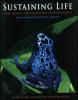
The Earth's biodiversity-the rich variety of life on our planet-is disappearing at an alarming rate. And while many books have focused on the expected ecological consequences, or on the aesthetic, ethical, sociological, or economic dimensions of this loss, Sustaining Life is the first book to examine the full range of potential threats that diminishing biodiversity poses to human health.
Seagrasses are flowering plants that thrive in shallow oceanic and estuarine waters around the world. Although there are only about 60 species of seagrasses worldwide, these plants play an important role in many shallow, near-shore, marine ecosystems. There is growing evidence that seagrasses are declining globally because of anthropogenic impacts. This paper presents an overview of seagrasses, the impacts of climate change, and other threats to seagrass habitats.