
Large-scale livestock grazing
2010
Hampicke, Ulrich |
Plachter, Harald |

The report focuses on timber trade from Brazil, Colombia, Ecuador and Peru and contributes to monitoring the impact and effectiveness of European Forest Law Enforcement, Governance and Trade (FLEGT)-related policy measures in South America through provision of preliminary baseline data on changes in timber trade between the region and Europe and other world export markets.
This publication presents the structure, the particulars, the methods for identifying and prioritizing the invasive alien species issues, the information derived from the invited presentations and the posters, as well as the outcomes of the conference "Freshwater Invasives - Networking for Strategy (FINS)" of the Inland Fishers Ireland (IFI) and the European Inland Fisheries and Aquaculture Advisory Commission (EIFAAC).
This publication provides for the first time factual information on the status of medicinal plants in Europe. This assessment includes 400 vascular plants from ninety families, and the good news is it shows that only 2.4% of medicinal plants are threatened. The collection of plants from the wild was identified as the prime threat, and impacts from agriculture were identified as another important threat.
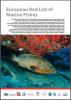
The European Red List is a review of the conservation status of European species according to IUCN regional Red Listing guidelines. It identifies those species that are threatened with extinction at the regional level, so that appropriate conservation action can be taken to improve their status. This publication summarizes results for all described native European marine fishes.
The synthesis report informs future European environmental policy in general and its implementation between 2015 and 2020 in particular. It includes a reflection on the European environment in a global context, as well as chapters summarising the state of, trends in, and prospects for the environment in Europe.
A companion volume to Keeping the Wild: Against the Domestication of Earth, Protecting the Wild provides a necessary addition to the conversation about the future of conservation in the so-called Anthropocene. Even as the biodiversity crisis accelerates, a growing number of voices are suggesting that protected areas are passé. Protecting the Wild offers a spirited argument for the robust protection of the natural world.
Invasive alien species (IAS) have been identified as one of the most important direct drivers of biodiversity loss and ecosystem service changes. Many international policy instruments, guidelines and technical tools have been developed to address this threat.
