
Wilpattu : villus and beyond
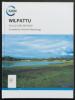
2009
Weeratunga, Vimukthi U. |

Visitors to parks and protected areas impact at many levels: political, economic, social and ecological. To ensure effective park management for increasing visitor numbers, good quality global data on visitor use is necessary. This manual describes terms, approaches and techniques for gathering information about public use of parks and protected areas.

This paper has been prepared to inform discussions at the upcoming Livelihoods Module development workshop organised by the People in Nature (PiN) team. The workshop will build on discussions from 2013-16 between the PiN team and the Species Programme and TRAFFIC around the integration of PiN and the Red List of Threatened Speciesusing the Species Information Service.


The Restoration Opportunities Assessment Methodology (ROAM) was developed by IUCN and the World Resources Institute (WRI) to assist countries in identifying opportunities for forest landscape restoration (FLR), analysing priority areas at a national or sub-national level, and designing and implementing FLR interventions.
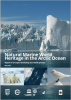
The 1972 UNESCO World Heritage Convention unites nations behind a shared commitment to preserve the world’s outstanding cultural and natural heritage for the benefit of present and future generations. This report presents the results of a scientific assessment of globally significant ecosystems in the Arctic Ocean that may be of Outstanding Universal Value (OUV) with respect to the natural criteria for World Heritage status.
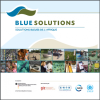
Cette publication est un résultat du troisième Forum régional pour les océans, les côtes et le bien-être humain en Afrique de Blue Solutions qui s’est tenu au printemps 2016. Elle compile 32 solutions bleues de l’Afrique dont la plupart ont été présentées pendant l’événement.
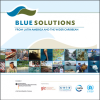
This publication is a result of Blue Solutions’ second Regional Forum on Solutions for Oceans, Coasts and Human Well-being in Latin America and the Wider Caribbean Region. This four-day workshop was held in Cancún, Mexico in April 2015.

