Scheduled maintenance - All access and functionalities will be impacted on Saturday, October 10th between 09h00 to 18h00 CET
Maintenance programmée - L'accès et toutes les fonctionnalités seront affectés samedi 10 octobre, entre 9 h 00 et 18 h 00 (CET)
Mantenimiento programado - El acceso y todas las funcionalidades se verán afectados el sábado 10 de octubre entre las 9h00 y las 18h00 CET

WCC-2025-Res-051 - Progress Report submission form

Activities to implement this Resolution from Activity Reports
Relevant operative para(s) of Res/Rec Activities Overview Description Status Action
4a Scientific/technical activities CEESP in collaboration with other organizations hosted a side event at SBI-7 in Nairobi to respond the question how can regional and subregional support centres within the Technical and Scientific Cooperation (TSC) Mechanism become genuine partners for gender-responsive KM-GBF implementation? Completed Full activity report
4a Scientific/technical activities CEESP in collaboration with other organizations hosted a side event hosted a side event at SBSTTA-28 in Nairobi focused on the total absence of gender-responsive data in the systems meant to monitor and report on the Kunming-Montreal Global Biodiversity Framework (KM-GBF). The session brought together technical experts, government representatives, and community researchers to share evidence, identify gaps, and chart a path toward more inclusive monitoring. Completed Full activity report
3a Policy influencing/advocacy IUCN has updated its gender policy in June 2026 and the policy is in alignment with the CBD Gender Plan of Action 2023–2030 and ensure IUCN programmatic work and initiatives contribute to promote gender equality, women’s empowerment, and the reduce of risks like Gender Based Violence Completed Full activity report
3a Field activities UICN Secretariat Work Plan has incorporated into the
Outcome: PEOPLE. Output 2 " Promoting gender equality in conservation" actions to advance the implementation of the resolutions
On-going Full activity report
3a Policy influencing/advocacy IUCN did a submission of information in preparation for the mid-term review of the Gender Plan of Action 2023-2030 CBD Notification 2025-103. Completed Full activity report
3a Policy influencing/advocacy IUCN has updated its gender policy in June 2026 and the policy is in alignment with the CBD Gender Plan of Action 2023–2030 and ensure IUCN programmatic work and initiatives contribute to promote gender equality, women’s empowerment, and the reduce of risks like Gender Based Violence Completed Full activity report
All Policy influencing/advocacy France has launched its 2025-2030 feminist diplomacy strategy at the end of 2025. One of its objectives is to promote a feminist climate and environmental action, by better mainstreaming gender in international environmental negociations, in strategies, in bilateral and multilateral finance, to build on women's scientific and traditional knowledge, and support their participation in decision making, to support Women’s Peace and humanitarian Fund. On-going Full activity report
Actors involved from Activity Reports
IUCN Members IUCN Commissions IUCN Secretariat Other non-IUCN related organisations
  • No other Members are/have been involved
  • No IUCN Commissions involved
  • IUCN Commission on Environmental, Economic, and Social Policy 2026-2029
  • Yes
Challenges / lessons learned from Activity Reports
Challenges / lessons learned Description Action
Other (please specify)

The TSC Mechanism has a clear political mandate for gender-responsive implementation but they need technical support and tools to do it mandate

Full activity report
Other (please specify)

a lesson learned is that without gender-disaggregated data and the meaningful participation of women in generating it, biodiversity monitoring will keep missing the people whose knowledge and labor sustain conservation on the ground and the policies built on that incomplete picture will remain less robust than they need to be

Full activity report
Insufficient / lack of resources

it has been more difficult to get funds to implement actions related to gender equality due to the actual funding and political environment

Full activity report
Other (please specify)

the lesson learned is that in order to ensure IUCN’s contribution to the implementation of the CBD Gender Plan of Action (2022–2030) is done by its programmatic and initiatives, a policy with mandate and alignment to the GPA has to be in place

Full activity report
Other (please specify)

- Drop in finance (especially ODA)
- Some countries refusing to move forward on gender issues in multilateral fora, and even coming back on agreed language.

Full activity report

WCC-2025-Res-024 - Progress Report submission form

Activities to implement this Resolution from Activity Reports
Relevant operative para(s) of Res/Rec Activities Overview Description Status Action
2b, 2h Education/Communication/Raising awareness Continuing this ongoing line of work, FARN marks World Wetlands Day 2026 with content on the role of traditional knowledge in the protection of high-Andean wetlands, highlighting the situation of Indigenous communities in Catamarca, Salta and Jujuy facing lithium mining pressure, and referencing the first Argentine Territory of Life (TICCA) registration achieved by the Red Torna Lickana communities. On-going Full activity report
2a, 2e Capacity building FARN continues its accompaniment of the Salinas Grandes and Laguna Guayatayoc case, supporting the incorporation of new actors into the ongoing Supreme Court proceedings. FARN also held the webinar "Territorios de Vida", sharing lessons learned from the TICCA registration process with the Red Torna Lickana and international TICCA Registry representatives, and continues to support communities in strengthening their own governance systems. On-going Full activity report
Actors involved from Activity Reports
IUCN Members IUCN Commissions IUCN Secretariat Other non-IUCN related organisations
  • No
Challenges / lessons learned from Activity Reports
Challenges / lessons learned Description Action
Lack of awareness / engagement

There are significant information gaps regarding the structure and functioning of high-Andean wetlands, the benefits they provide, and the scope of the impacts that their degradation could generate — limiting the ability of relevant actors to recognize and prioritize their protection.

Full activity report
Other (please specify)

Regulatory gaps / environmental assessment shortcomings: Persistent regulatory gaps and shortcomings in environmental assessment processes, particularly regarding cumulative impacts and impacts at the watershed (basin) scale, limit the ability to adequately evaluate and prevent the effects of extractive projects on high-Andean wetlands.

Full activity report
Monitoring and accountability issues

Difficulties linked to the violation of the right to participation, particularly of Indigenous communities inhabiting high-Andean wetlands, in decision-making processes. This includes the inadequate application of consultation mechanisms and of free, prior and informed consent (FPIC).

Full activity report
Insufficient / lack of resources

Limited resources are available for the protection and monitoring of high-Andean wetland ecosystems, constraining the ability to track their condition and respond to emerging threats.

Full activity report
Other (please specify)

Growing extractive pressure on territories: A context of growing pressure on high-Andean territories due to the expansion of projects linked to minerals considered strategic for the energy transition — particularly lithium mining in the Andean region — is intensifying threats to these ecosystems and the communities that depend on them.

Full activity report

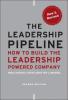
The leadership pipeline

Plano de recuperação de Uebelmannia buiningii Donald = Recovery plan for Uebelmannia buiningii Donald

WCC-2025-Res-007 - Progress Report submission form

Activities to implement this Resolution from Activity Reports
Relevant operative para(s) of Res/Rec Activities Overview Description Status Action
1, 2, 3 Scientific/technical activities Established the GLISS Working Group under WCEL SoilSAL and mobilised a multidisciplinary group of legal, policy and soil-science experts. A four-year implementation approach, regular meeting cycle and collaborative work arrangements were put in place. Five meetings were held from March to August 2026; the sixth is scheduled for September, with significant preparation completed. On-going Full activity report
1, 2, 3 Capacity building Established a secured collaboration platform to help organise tasks and subtasks, manage working group documents, share research resources, record meeting outcomes and track progress over time. Completed Full activity report
1 Scientific/technical activities Established a first sub-working group on sustainable soil management/use terminology. On-going Full activity report
1 Scientific/technical activities Compiled foundational texts in international environmental law and policy. Completed Full activity report
1 Scientific/technical activities Collaborating with GLISS experts to review recurring legal principles across selected international and regional binding and non-binding instruments to select relevant legal principles for soil security. Assessing whether and how the nine soil policy principles underpinning soil security can be translated into legal principles for inclusion in a global legal instrument on soil security. On-going Full activity report
1 Scientific/technical activities Advanced the core architecture of a future global legal instrument on soil security by developing its objectives, scope, definitions and preparing a working Preamble. The text is being refined through comparative legal, policy and scientific reviews. On-going Full activity report
1 Scientific/technical activities Reviewing and comparing possible legal forms for a global legal instrument on soil security. On-going Full activity report
1, 3 Policy influencing/advocacy Examined short-term and long-term legal strategies for implementing Resolution 8.007. Completed Full activity report
1, 3 Policy influencing/advocacy Assessed alternative approaches to a global legal instrument on soil security. Completed Full activity report
1, 3 Convene stakeholders/Networking Continuously screens prospective GLISS members and identifies additional scientists, legal experts and specialists whose expertise would add value. Planned outreach also maps universities, scientific institutions, relevant IUCN bodies and soil-governance initiatives that could contribute to or support the process. Planned Full activity report
3 Policy influencing/advocacy Identified the states and NGOs that supported Resolution 8.007 at the IUCN World Conservation Congress with a quantitative analysis. Completed Full activity report
1, 3 Other (please specify) Transparency:
Mapping the expertise, institutional affiliations and geographical representation of GLISS Working Group members.
Planned Full activity report
1, 2, 3 Convene stakeholders/Networking Coordinating with the Resolution 8.002 soil-biodiversity and sustainable-agriculture workstream.
GLISS Chair and Deputy Chair participated to two meetings. The Chair will participate to the first meeting of the Cross-Commissions WG on "Agriculture and Food Systems and Biodiversity".
On-going Full activity report
1, 2 Scientific/technical activities Conducting a literature review to examine the legal significance and distinctions between protection, conservation, restoration, rehabilitation, sustainable soil management and sustainable use and development a relevant terminology. Planned Full activity report
1, 2 Scientific/technical activities Assessing how soil biodiversity, soil functions, soil services, ecological integrity and human health should be reflected in the instrument. On-going Full activity report
1, 2 Scientific/technical activities Prepare a proposal clarifying the relationship between GLISS and the voluntary guidelines of the European Soil Partnership, including their relevance to terminology, scientific coherence and implementation pathways. Planned Full activity report
1, 3 Scientific/technical activities Establish a second sub-working group on the GLISS and Rio Conventions relationship to analyse complementarity, mutual supportiveness, scientific and institutional cooperation, compatible monitoring and reviewing, acknowledgement of overlaps and avoidance of unnecessary duplication. Planned Full activity report
1, 2 Scientific/technical activities Establish a third sub-working group on definitions and terminology. Planned Full activity report
1, 3 Scientific/technical activities Within the second WG on GLISS and the Rio Conventions: review of the UNCCD COP17 decisions/CRIC24/CST17 documents and The Coalition of Action 4 Soil Health (CA4SH) knowledge product 02 "How Healthy Soil Aligns the Rio Conventions and Global Agendas". Planned Full activity report
1, 3 Scientific/technical activities Preparation of a legal and institutional brief analysing how soils are framed and operationalised within the UNCCD, CBD and UNFCCC frameworks. Planned Full activity report
3 Education/Communication/Raising awareness Development of policy briefs and visual materials explaining the soil security concept and its relationship with other soil governance concepts. Planned Full activity report
1, 2 Scientific/technical activities Collaborate with the Resolution 002 Commission Expert Group on Soil Biodiversity to ensure that biodiversity components are scientifically robust and legally and politically operational. Planned Full activity report
2, 3 Education/Communication/Raising awareness Develop targeted policy briefs and visual materials for policy audiences, including UNCCD national focal points and relevant ministries. Outputs will include concise country-level legal and policy gap analyses on soil protection, alongside comparative summaries of key soil-governance concepts (including land-soil distinctions), and the legal effects, coverage and gaps of international and regional instruments. Planned Full activity report
Actors involved from Activity Reports
IUCN Members IUCN Commissions IUCN Secretariat Other non-IUCN related organisations
  • IUCN World Commission on Environmental Law 2026-2029
  • Yes
Challenges / lessons learned from Activity Reports
Challenges / lessons learned Description Action
Lack of awareness / engagement

Global participation spans widely separated time zones and relies largely on voluntary availability, which can affect attendance and the depth of engagement. Advance circulation of focused questions, asynchronous drafting in shared documents, intersessional work and small task-specific groups help sustain substantive participation between meetings.

Full activity report
Other (please specify)

Translating science into law: the group is distinguishing core definitions and principles from indicators, methodologies and thresholds that may be better developed in later provisions, annexes or guidance and operationalising a concept rooted in soil science and policy.

Full activity report
Other (please specify)

Soil-governance specific challenge: soil governance is fragmented across scales and within legql qnd policy frameworks, avoiding duplication requires an exhaustive comparison with the relevant international and regional instruments to identify gaps and complementarity.

Full activity report
Insufficient / lack of resources

Given the reliance on voluntary expert time, prioritization, focused intersessional assignments, and staged consultations are required. While these measures are essential, they often lead to slower progress toward achieving our objectives and an uneven distribution of workload, with a small core of contributors carrying a disproportionate share of drafting and review.

The absence of budget for in-person meetings, limiting the depth of deliberation achievable in virtual formats.

Full activity report
Coordination issues

Consensus-based decision-making safeguards legitimacy and expert buy-in but extends timelines when views diverge. This is particularly pronounced at the science-policy-law interface. Structured options, recorded areas of convergence and clearly assigned follow-up work help maintain progress without prematurely closing important questions.

Full activity report
Subscribe to